BRIX project successfully completed: AI makes bridge inspections faster, clearer, and safer
©iStockphoto/Lightcome
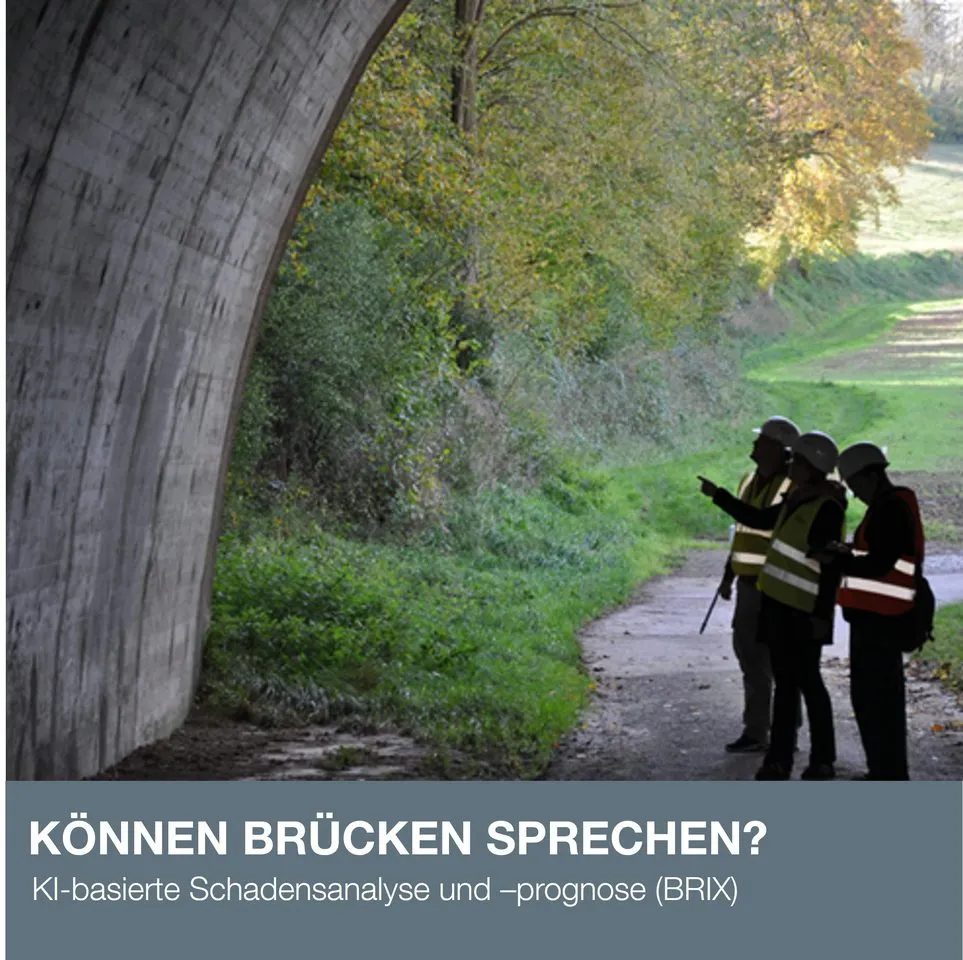
"Where exactly was that crack again?” Anyone who inspects bridges knows this question—and the often time-consuming search for clear answers. In the BRIX research project, HOCHTIEF ViCon Engineering, Ruhr University Bochum, and the Federal Highway Research Institute (BASt) have now demonstrated how artificial intelligence can truly ease that burden—without replacing the responsibility of human experts.
By linking high-resolution laser scans and 3D models with AI-based damage detection and assessment, plus historical inspection data, we create a digital damage dossier that not only documents but also predicts future developments—essentially giving the bridge a “voice”:
“I have a crack—but it’s only superficial.”
“Warning! Immediate action required.”
Three key benefits
- Damage localization: photos are pinpointed in the 3D model with millimeter accuracy, reducing on-site search time
- Time-travel mode: old and new images can be overlaid, making changes instantly visible
- Action prompts: AI automatically ranks urgency, enabling faster, well-founded decisions
Why does this matter to us? Because technology should relieve, not impress. Less searching on site means more time for what truly matters: the safety of our bridges and the people who use them.
With BRIX successfully completed, the journey continues. In the follow-up project BRIX² we will:
- further improve predictive accuracy,
- include additional structure types, and
- integrate the solution into standard asset-management systems.
We thank Ruhr University Bochum for their excellent scientific collaboration and BASt for their trust and active project support.
©
Further News |
Would you like to learn more?
Here you can find more interesting news from the world of ViCon.
Overview